

How To Look For Templates In Word
In Microsoft Word, templates are pre-designed documents that you or someone else (such as Microsoft) creates to use as a pattern for a project. The template could be for a business card, brochure, resume, presentation…the list goes on. Regardless of the purpose, templates provide the blueprint consistency that whatever organization (or individual) needs to wait professional. (Yous can also find templates for Excel, PowerPoint, and other applications, just in this article we're focusing on Microsoft Word.)
The template contains a specific layout, style, pattern and, sometimes, fields and text that are mutual to every apply of that template. Some templates are so complete (such equally concern cards), you lot only have to change the private's proper name, telephone number, and email address. Others, such as concern reports or brochures, could crave that everything is changed except the layout and pattern.
In one case you create a template, you can use it over and over. Remember that while you open a template to outset a project, you save the project as another file type, such as the bones .docx Word format, for editing, sharing, printing, and more. The template file stays the same, unless or until you desire to change it (more on that afterwards).
 JD Sartain / IDG Worldwide
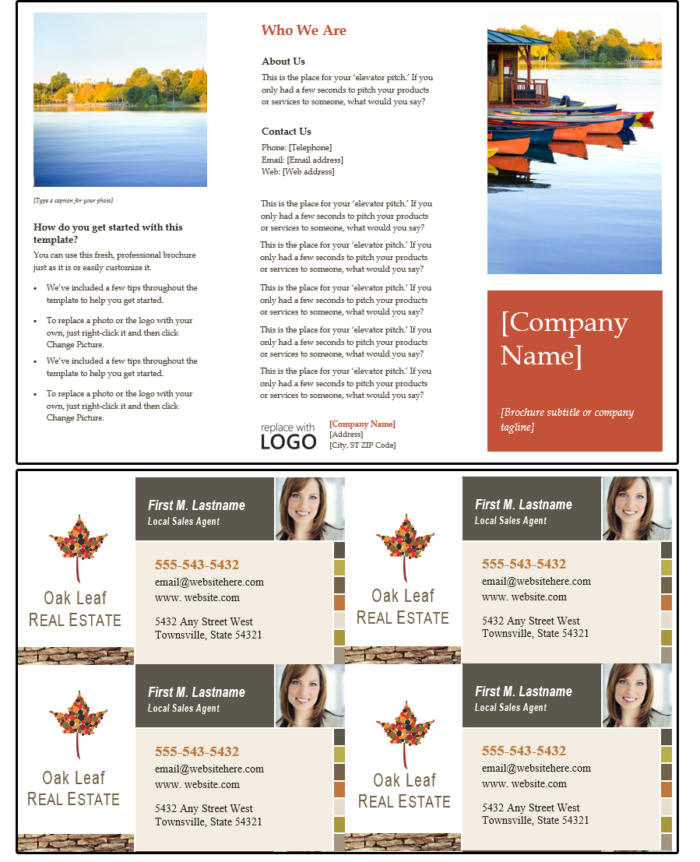
 This is a sample template in Microsoft Word.
How to access Microsoft Word's stock templates
Fortunately for u.s.a., Microsoft provides many hundreds of templates for all of its programs. Note that most of Microsoft'due south templates are online, which means yous cannot access them unless you lot're connected to the Internet.
To open up one of the system-provided templates in Discussion:
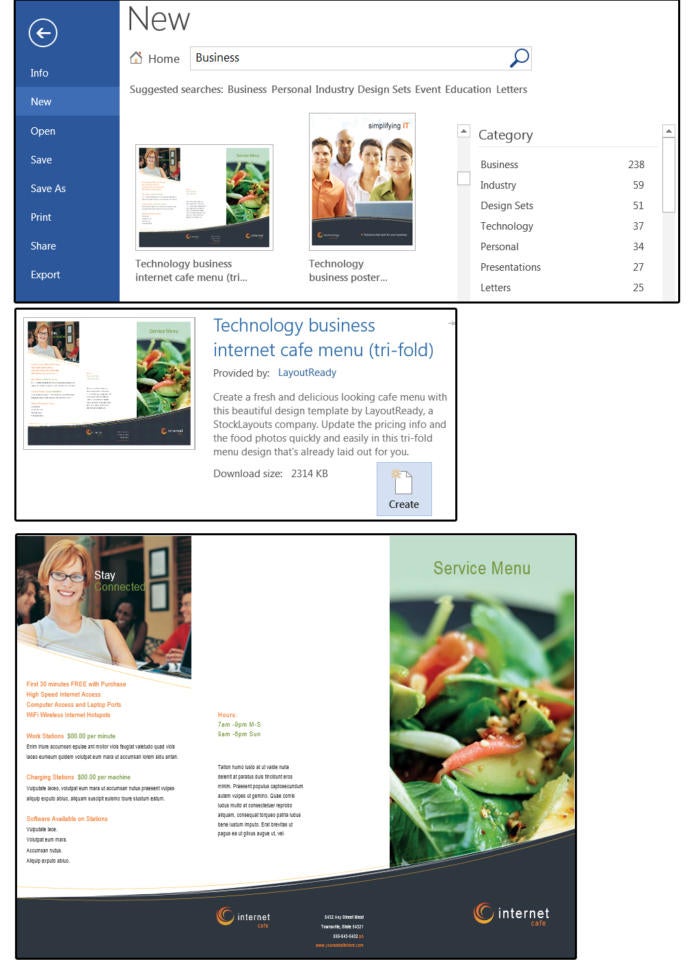
1. Open Microsoft Give-and-take and select New.
2. Peruse the Suggested Search categories: Business, Personal, Industry, Pattern Sets, Events, Education, or Letters. For this exercise, select Business.
3. Word displays a bulletin that says, "Searching thousands of online templates."
4. Discussion displays template search results on-screen, plus a comprehensive list of categories in a scrolling console on the correct.
5. Scroll down the folio or cull a dissimilar category, so select a template that fits your current project.
 JD Sartain / IDG Worldwide
 Select a template from a category, then showtime filling in your own data and images.
We selected the Internet Café template. Detect the photos, graphics, and main information, such every bit hours, are already created in the template. You but have to type over the existing data with your company's data, and the brochure is complete.
How to modify a Microsoft Word template
Yous tin can change the colors, font, photos, logo, and anything else on this template. If you lot accept not selected the Net Café brochure, please exercise so now. Before you brand whatever changes, go ahead and salvage this template with a new filename.
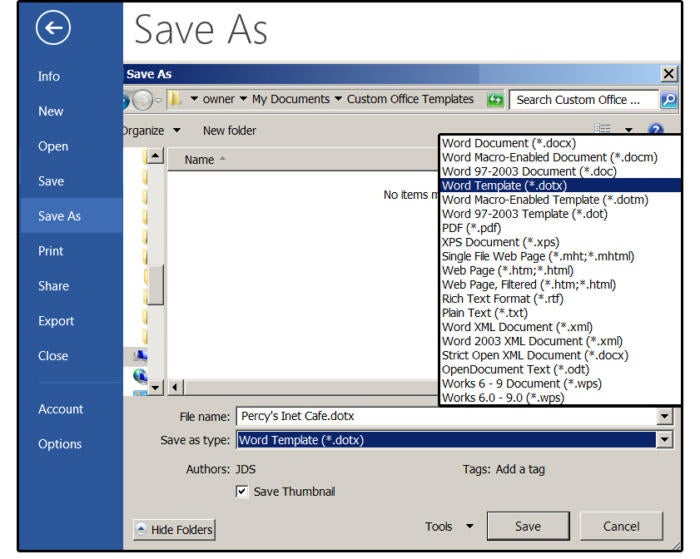
1. If you follow normal certificate-saving procedures (and y'all tin here), you lot select File > Save As > Figurer > Browse. Then navigate to the applicable folder and give the template a new name.
2. Recall that once you click the down arrow beside the Save As Type in the input box and select Word Template (*.dotx) from the list (and modify the name, of grade, in the File Name input box), Microsoft automatically puts the file in its own template folder.
three. One time saved as a template, close the file.
4. Now open up it once again. Note that it is not in the folder yous specified. Don't panic. Navigate to C:UsersownerDocumentsCustom Role Templates and your custom templates are at that place. Select the one you lot merely saved from the list and open it.
 JD Sartain / IDG Worldwide
 Relieve the document as a template.
5. Change the sections on the new template that will be on every brochure, such as the logo, or contact information. Then save it as a template once more by pressingCtrl+ South. It will salve in the same location.
6. Next, make full in all the other information and salvage it—this time, equally a document, so yous can print it out or share information technology with others.
Whenever you lot're prepare to create a new brochure, just open the template, enter the new information, and salve the completed brochure as a document.
 JD Sartain / IDG Worldwide
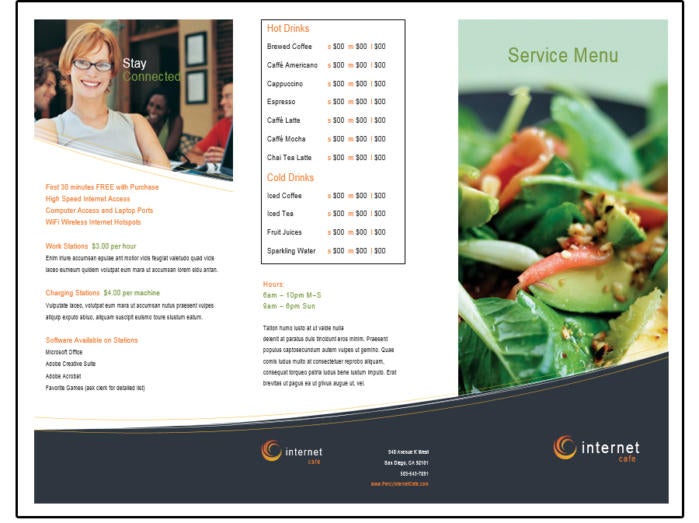
 This Cyberspace Café template has been modified and saved as a document brochure.
How to create custom templates in Give-and-take
Custom templates can exist as uncomplicated or complex every bit needed. For example, you might create a template for your company's newsletter, posters for a seminar, or invitations for corporate events. You tin can besides create interactive templates to load on the Intranet, and then others tin can make full in the blanks to print their own envelopes and letterhead, for example.
First, create a document—design and format it, add graphics and photos. If it's interactive, select Controls from the Developer tab and create custom input fields for user interaction.
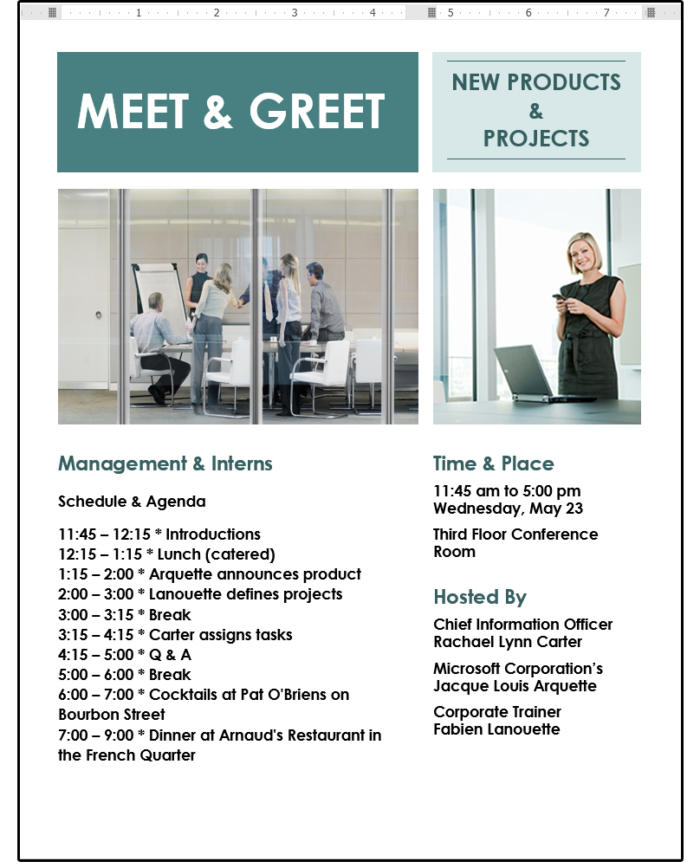
For this exercise, create an proclamation flyer for a Meet & Greet conference including lunch, cocktails, and dinner for the visitor's senior management and its new interns.
1. Beginning with a blank document.
2. Create two columns: The left is 4.5 inches and the right is two.5 inches, and the infinite betwixt the columns is well-nigh iii/8 of an inch. These measurements are only suggestions. Adjust as necessary for your project and the images and graphics yous choose.
3. Add together a title.
4. Choose a font (nosotros're choosing Century Gothic), style (sans serif), and colour (white), for that championship.
5. Repeat this process for a subtitle. In our example, nosotros're changing the font color to dark teal.
vi. Create some graphic boxes for the title (dark teal) and the subtitle (light teal). Select Insert > Shapes and choose a rectangle from the icon list.
7. Insert an applicable photo in both columns. Choose Insert > Pictures and select photos from your Pictures Library. Adding images gives y'all an opportunity to eyeball epitome sizes and cavalcade widths and adjust them as needed.
8. Enter the schedule and agenda in column one. Use Century Gothic 14 (in black) for the body text and Century Gothic 18 (in dark teal) for the headers.
9. Enter the time and identify plus the conference hosts in column two, with the aforementioned fonts and colors for the body text and headers.
 JD Sartain / IDG Worldwide
 Create a custom event template.
10. Once satisfied with the final product, click Save As > Run across+Greet.docx (a regular Discussion document), and so you tin share or print.
eleven. Before you exit, also salvage this certificate as a template. Click Save As > Salve Equally Type, choose Discussion Template [*.dotx] from the list, and save as Meet+Greet.dotx. Next conference, the template is ready to get you started.
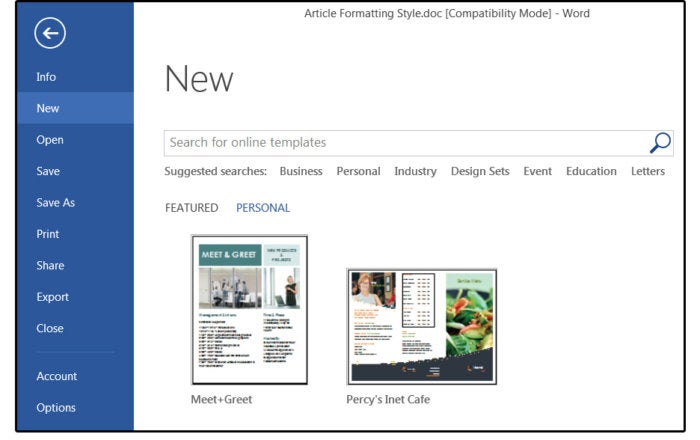
Once you have some custom templates in your Custom Office Templates folder, when y'all open Word and select New, Word provides a new category on the backstage bill of fare called Personal. Click this category to meet and open your saved templates.
 JD Sartain / IDG Worldwide
 Open up your custom template under New > Personal.
How to add together an interactive component to a template
Some templates use interactive controls for user input. For example, imagine that once a month, the branch managers, assistant managers, and loan originators of a big banking institution have a meeting at i of the 12 branches. Information technology'due south your assistant's job to email the date, time, location, speakers, topics, and calendar to each attendee. Rather than have that person retype the data in a regular template, you lot can create a template where options can be called from a list. For example:
1. Starting time, create the template, then make up one's mind which fields (date, fourth dimension, etc.) can be selected from a list.
2. Click the Developer tab.
3. Position your cursor on the template where the date goes.
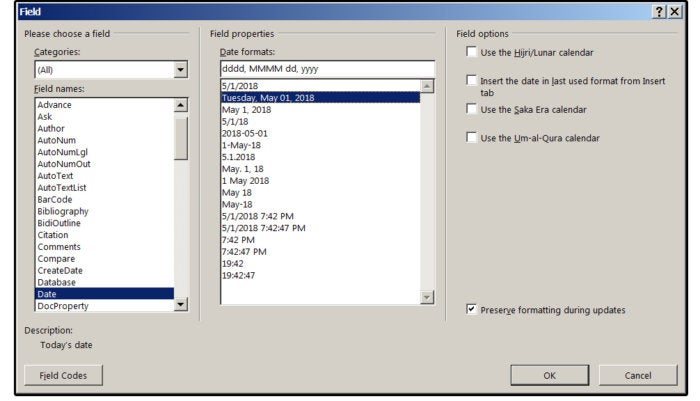
iv. Select Insert > Text > Quick Parts > Field, then cull Engagement from the Categories panel and select a date format from the Properties console. Click OK. Now the date will update automatically.
 JD Sartain / IDG Worldwide
 Insert a date field that automatically updates.
v. Adjacent, position your cursor on the template where the location goes.
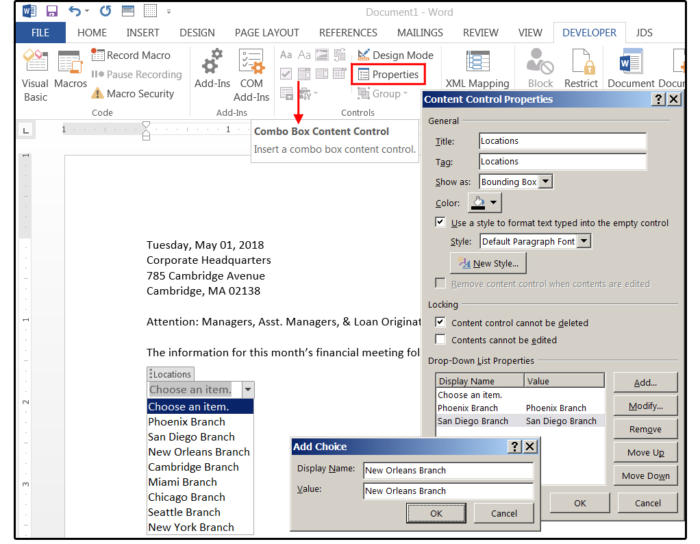
6. Select Developer > Controls > Philharmonic Box Content Control. Word places this item on your template.
7. With the Developer tab yet selected, click Controls > Backdrop, and the Content Control Properties dialog window opens.
eight. Click the Add button, enter a branch name in the Add Option dialog box, then click OK. Echo this process until all the branch locations are entered, and so click OK again to shut this dialog window.
 JD Sartain / IDG Worldwide
 Create a Combo Box Command so users tin can select options from a listing.
ix. If you want to modify, remove, or move an entry up or downwardly, highlight the entry, then click the appropriate button.
x. You can modify the color of the Philharmonic Box frame and change or create a custom mode (fonts, color, attributes, etc.) for the typeface used inside the Combo Box.
eleven. Repeat steps five through viii above to create Combo Box Content Controls for the remaining fields: coming together date and fourth dimension, speakers, and topics.
12. When finished, salvage the document as a Give-and-take Template (*.dotx).
Template tips: how to create custom stylesheets
The default stylesheet in MS Word is called normal.dotx. It'southward not a good thought to modify this stylesheet because, afterwards, it could result in some unwanted effects. It'south all-time to create custom stylesheets for each custom template. For case, the normal.dotx font is Calibri, paragraphs are left aligned, spacing is one.fifteen, etc. Heading 1 is Cambria 16 point, etc. Y'all tin can change these settings manually throughout your certificate without saving them to the normal stylesheet, and before you relieve the document equally a template.
In one case satisfied, use those custom settings for your new stylesheet, which could exist named something similar to the template proper name. For case, if y'all're creating a custom brochure template, y'all might proper name it and the stylesheet Brochure1. Then future brochures will be much easier to design.
ane. Choose the Home tab, so click the small pointer in the bottom right corner of the grouping called Styles. From the driblet-down menu, click the New Styles button (lesser left).
2. In the popup dialog Create New Style from Formatting, enter the name of the style, such as Brochure1.
3. Adjacent select Paragraph from the Way Type field list, which affects the entire paragraph, as opposed to a Character style, that affects merely the characters within a paragraph.
iv. Yous can choose to make the style based on another way, such equally the Normal style, i of the Header styles, or No style. If you plan to utilise nigh of the formatting features in the Normal way except a few differences, then base information technology on the Normal fashion. If the custom style will be completely different, and so choose the No style option.
five. Under Formatting, select a Font and Size, so choose a Font Color such as Brownish, Alignment such as Justify, Spacing such as 1.15, and Indents. Discover that the box in the center of the dialog window shows how the paragraph looks with the format options y'all select.
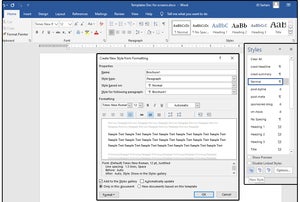 JD Sartain / IDG
 How to create a custom stylesheet
6. In the lesser left corner, click the Format button. Notice the nine options in the driblet-down list. In the Font dialog, yous can farther customize the font options such every bit font style (bold, italic, etc,), underline mode; Sub- and Superscript, Pocket-sized Caps, etc.
7. In the Paragraph dialog, yous can customize the Indents & Spacing and the Line & Folio Breaks. Utilise the Tabs dialog to customize the alignment and the leader of your tabs, such as the dots between the chapter proper noun and chapter page number on a tabular array of contents.
8. The Borders & Shading dialog provides Border options such as Box, Shadow, 3D, etc.; and Shading options include colors and patterns. The Language feature is, of grade, the language of the paragraph such every bit French or Italian. Note that if you desire simply specific words in another linguistic communication, such as c'est la vie in the middle of a paragraph, and so create a character manner called French.
9. The Frame pick is actually the Text Wrap feature, which includes how the text wraps effectually a graphic in a paragraph, the spacing around the graphic, and how it's positioned on the folio. Choose Numbering to define how you lot want the numbers to appear such as the standard Standard arabic numbers, Roman Numerals, or Characters; how they are spaced; and delineated such as with a menstruation after or parentheses, etc. Bullets are also defined under this list choice, which provides standard and custom bullets.
10. Next is the Shortcut Central options, which lets you cull a custom Shortcut key for your Paragraph or Grapheme style, such as Ctrl+B for bold (which is a Give-and-take default), or define your own. Last on the list is Text Effects, which lets you define the color, gradient, pattern, outline, and transparency of a paragraph such as the championship on the title page of a volume or manual. Additional Text Effects include Shadow, Reflection, Glow, Soft Edges, and 3D Format.
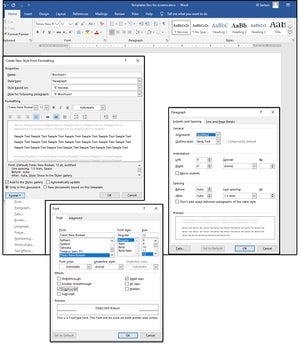 JD Sartain / IDG
 How to format a custom stylesheet
Where to find the template files on your computer
The custom templates that you create or modify from one of Microsoft's stock templates are stored at C:UsersOwnerDocumentsCustom Office Templates, where <Owner> is your login name. When you open the Users binder, you'll see your login proper noun on the list of folders. If not in that location, information technology should be in the folder that's really called Owner.
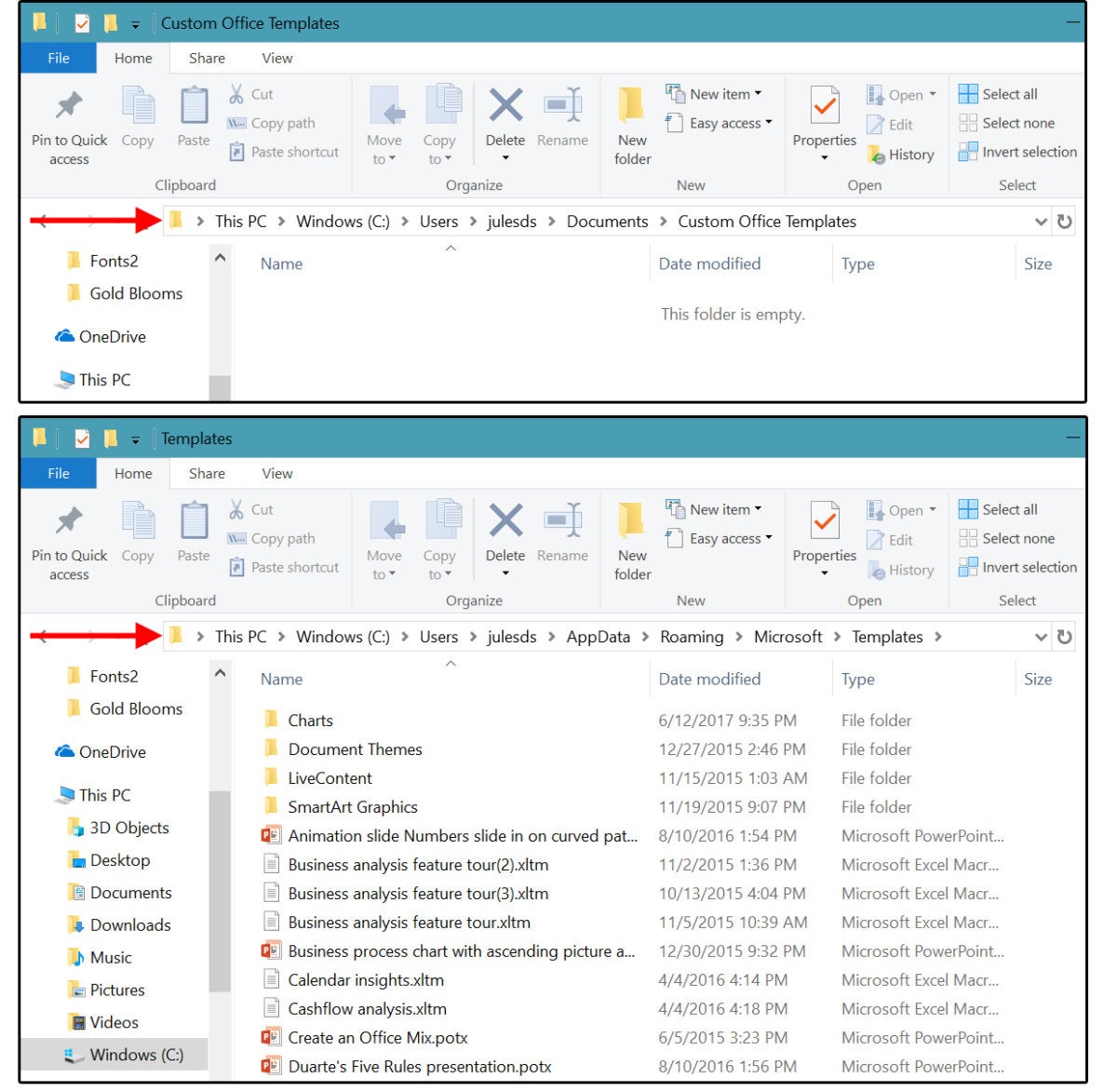 JD Sartain / IDG Worldwide
 Where the personal custom templates and the stock templates are located
Microsoft stores its templates at:
C:Users<your login name>AppDataRoamingMicrosoftTemplates
Again, if you lot failed to create a unique login name, this folder may be chosen <Owner>. If yous tin can't discover it, the AppData folder and all of its files and subfolders are hidden.
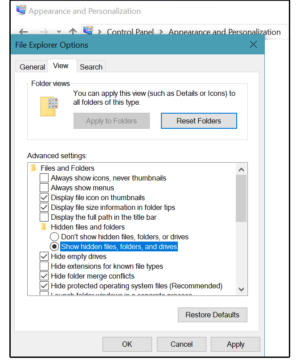 JD Sartain / IDG Worldwide
 Testify Hidden Files and Folders
To view the Hidden files:
- Select the Start/Windows button > Command Panel > Appearance and Personalization
- Select File Explorer Options/Folder Options > Show hidden files and folders
- On the adjacent screen, check the tick mark beside Show hidden files, folders, and drives, then click Employ and OK.
 JD Sartain / IDG Worldwide
 Ii more ways to locate the stock templates folder
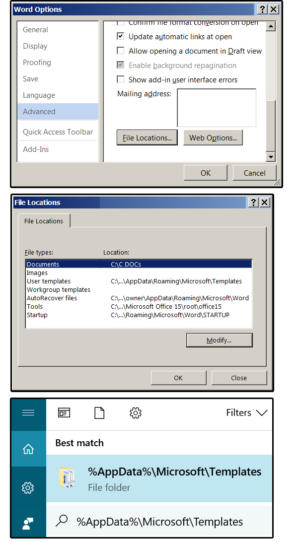
To discover the actual name of the Templates folder:
- Select File > Options > Advanced
- Scroll about two-thirds of the way down the screen.
- Click the File Locations button, and the File Locations window appears.
- Discussion displays the locations and paths to all the template-related files.
Yous tin can also click the Start button, and so copy and paste this: %appdata%MicrosoftTemplates in the Search box and printing Enter. The Templates folder appears in the Start box. Double-click to become directly to the stock templates folder.

How To Look For Templates In Word,
Source: https://www.pcworld.com/article/401866/microsoft-word-templates-how-to-use-modify-and-create-them.html
Posted by: gallowaycusese.blogspot.com
0 Response to "How To Look For Templates In Word"
Post a Comment